Bessie Head: Botswana and South Africa’s Shared Literary Great
By Alex J. Coyne | On October 5, 2025 | Comments (2)
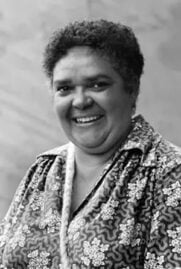
Bessie Amelia Emery Head (July 6, 1937 – April 17, 1986) was a novelist, journalist, and poet born in Pietermaritzburg, South Africa. She later left for Serowe, Botswana, and became an established literary figure across these two countries’ borders.
This overview of the life and work of Bessie Head is an introduction to this notable literary figure who was instrumental in gaining a more international voice for African peoples.
A complicated early Life
Bessie was born in a psychiatric hospital where her mother, Bessie Amelia Emery, was institutionalized, and where she remained for the rest of her life. As reported by South Africa’s Sunday Times Heritage Project:
“According to the racial legislation of the time, Bessie was classified as white and was placed with a white adoptive family. However, her racial identity later became blurred as the white family’s lawyer noted: ‘The child is Coloured, in fact quite black and Native in appearance.” The state authorities hastily removed Bessie and placed her under the care of a ‘Coloured’ adoptive family, George and Nellie Heathcote.”
Bessie was removed from the Heathcote’s home by social services around the age of twelve. This started the process of feeling alienated from her heritage, stemming from the fact that she was considered mixed race or ‘coloured’ under the South African government’s racial classification.
Documented in a letter to her publisher for a never-completed autobiography, she wrote that she was “as anxious to avoid any knowledge of my mother’s white relatives as they were anxious to destroy my mother and disown me.”
Early journalism and writings
Bessie began teaching in Durban, KwaZulu-Natal, and held the position from 1956 to 1958. Her first newspaper job was working for the Golden City Post in Cape Town. Around 1959, she joined Home Post at their Johannesburg offices.
She was inspired by the writing of Mohandas Gandhi and Robert Sobukwe, (the founding member of the Pan Africanist Congress (PAC). Her letters would compare Gandhi and his writing to being Godlike, and she particularly admired his contributions to civil rights that might have well inspired her own.
In 1960, Bessie joined the Pan Africanist Congress. Because it was a banned organization under the South African apartheid government, she was arrested. Although charges were later dropped, this event is said to have been the driving force behind her first suicide attempt.
Returning to Cape Town, she founded and published The Citizen newspaper. Bessie established a close association with District Six and the coloured community. She mixed with prominent figures that would influence her life and writing, including jazz musician Abdullah Ibrahim (then known as Dollar Brand).
The apartheid government would later gain control of The Citizen and other newspapers in an operation dubbed Operation Muldergate. Attempting to purchase these magazines, the government believed they could have a stronger hold on public opinion – and directly counteract the anti-apartheid motions of authors like Bessie Head.
. . . . . . . . . .
. . . . . . . . . .
Marriage, Cape Town to Pretoria, and early works
Bessie met Harold Head in 1961, and they married six weeks later. Their marriage was an unhappy one from the start, and she soon began to seek any escape from her troubled and depressed home life. Her son was later diagnosed with fetal alcohol syndrome — a consequence of her stressed, erratic lifestyle during her pregnancy.
Some of Bessie’s later poems, written around 1961–1962, were discovered in 1995. These were donated to the National English Literary Museum in Grahamstown, South Africa.
She finished writing her first novel, The Cardinals, in 1962. However, it was published only after her death. The Cardinals tells of a girl named Mouse, who is sold by her birth mother – and who later runs away from home after being abused by her stepfather. The book is one of her only novels set in South Africa, and takes place in Cape Town during the 1950s.
Bessie left Cape Town at the end of 1963 and moved into her mother-in-law’s house in Atteridgeville, Pretoria. She described the circumstances of her marriage while living in her mother-in-law’s house and attempting to gain a teaching job as being “at the edge of despair and terror.” She also tried to get a teaching job in Uganda; however, her passport was refused, possibly due to her earlier involvement with the PAC.
Bessie in Serowe, Botswana
Bessie’s marriage ended in 1964. She left for Serowe with her son to start a new life in Botswana on a one-way exit permit. She returned to her teaching background at Tshekedi Memorial School.
Starting a new life in Serowe wasn’t easy, and due to her political affiliations, it took fifteen years to gain legal citizenship in Botswana. Her teaching job only lasted a year and a half. In a letter, she stated that a lack of respect for women in the workplace was the reason for her dismissal.
Her letters also reveal that she often asked friends for money or extensions on loans that they had given her. As a thanks to some, she reportedly enclosed some of her original writing within these letters. She was a prolific letter writer, and some of her letter collections have received as much attention as her other writings. – including her writings to South African poet Patrick Cullinan and his wife, Wendy.
Her letters have been studied more in recent years. A study by Annie Gagiano (Writing a Life in Epistolic Form: Bessie Head’s Letters) points to her early childhood letters, where she “takes on the role of social commentator” that she would occupy for life.
. . . . . . . . . .
. . . . . . . . . .
Bessie Head’s Major Literary Works
When Rain Clouds Gather (1968) tells the story of a political refugee named Makhaya, who flees to Botswana and settles in a rural town called Golema Mmidi. Makhaya comes to meet the English agricultural expert Gilbert Balfour, who joins forces to introduce new technology and farming techniques to the village.
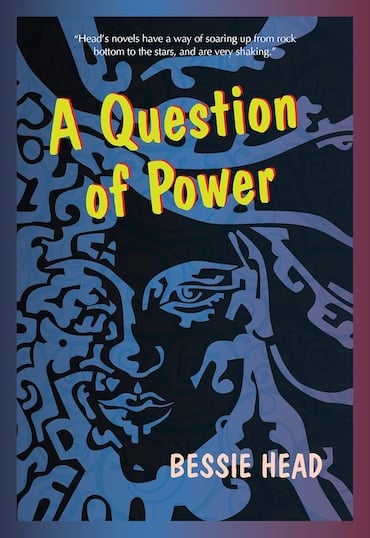
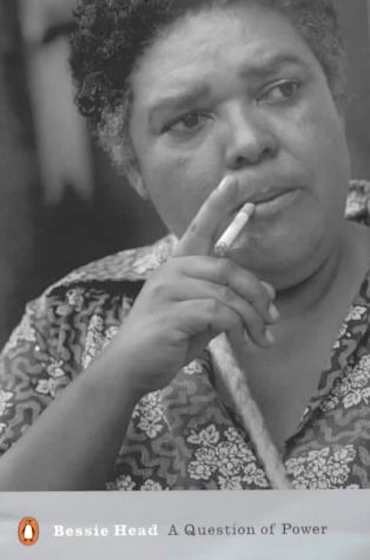
Around 1969, Bessie began to experience symptoms of depression and schizophrenia, which led to her hospitalization in Lobatse Mental Hospital. After this episode, she wrote A Question of Power (1973). Bessie wrote in a letter to her agent that this book had drawn from her mental health and anxiety at the time.
A Question of Power is one of Bessie Head’s best-known works and is considered semi-autobiographical. The main character, named Elizabeth, leaves South Africa to live in Botswana. Many of her experiences seem to draw directly from Bessie’s life.
Maru (1971) tells the story of historical racial discrimination between the Setswana and San peoples. Head speaks from the perspective of Margaret Cadmore, a member of the San/Basarwa people, and shares her experiences as teacher in the village of Dilepe – where her people face brutal discrimination.
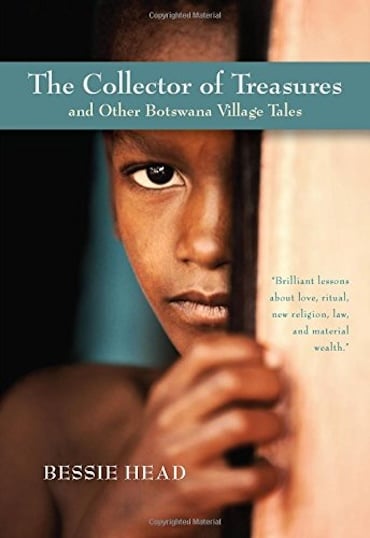
In 1977, she published the short story collection The Collector of Treasures. Serowe: Village of the Rain Wind (1981) was a personal perspective on Botswana – the place she set most of her stories, and where she felt most at home. Bessie Head’s last novel, A Bewitched Crossroad (1984) was set in Botswana, spanning from 1800 to 1895, and explored the Sebina clan.
. . . . . . . . . .
. . . . . . . . . .
Later Life and Final Novel
Bessie lived with her son until her death from hepatitis in April 1986. She passed away at Sekgoma Memorial Hospital in Serowe.
Much of her acclaim arrived later in life, and today she is considered a literary legend in both Botswana and Southern Africa. Bessie was awarded the national Order of Ikhamanga posthumously in 2003 for her contribution to literature. In 2007, the Bessie Head Heritage Trust and Bessie Head Literature Awards were established to further her legacy.
In 2013, the Bessie Head Heritage Trust recommended that the Serowe library be named after her, as she had been an active member of the library during her lifetime. Her papers are archived at the Khama III Memorial Museum in Serowe.
. . . . . . . . . .
Further reading and sources
- SA History Online: Bessie Amelia Head
- Britannica: Bessie Emery Head
- The South African Presidency: Bessie Head
- The South African Literary Awards: Bessie Head
- Botswana Tourism: Explore Serowe
Contributed by Alex Coyne, journalist, author, and proofreader. He has written for a variety of publications and websites, with a radar calibrated for gothic, gonzo and the weird. His features, posts, articles and interviews have been published in People Magazine, ATKV Taalgenoot, LitNet, The Citizen, Funds for Writers, and The South African, among other publications.
More by Alex Coyne on this site
- Nadine Gordimer, South African Author and Activist
- 8 Essential Novels by South African Author Nadine Gordimer
- Jeanne Goosen, Author of We’re Not All Like That
- 6 Notable South African Women Poets
- The Banning of Nadine Gordimer’s Anti-Apartheid Novels
- Olive Schreiner, Author of The Story of a South African Farm
- 10 Unforgettable Books by South African Women Writers
- Ingrid Jonker, South African Poet and Anti-Apartheid Activist
Hi, I’m a Bessie Head scholar and there are several untruths in this piece.
Could you let me know so I can correct the article? it was contributed by a South African writer; here in the U.S. she’s not well known. I would really appreciate your input.