Edna O’Brien, Prolific Irish Author of The Country Girls
By L.C. Canivan | On November 5, 2025 | Updated November 17, 2025 | Comments (0)
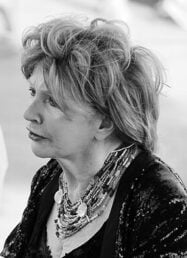
Edna O’Brien (December 15, 1930—July 27, 2024) was an Irish novelist, memoirist, playwright, poet, and short-story writer.
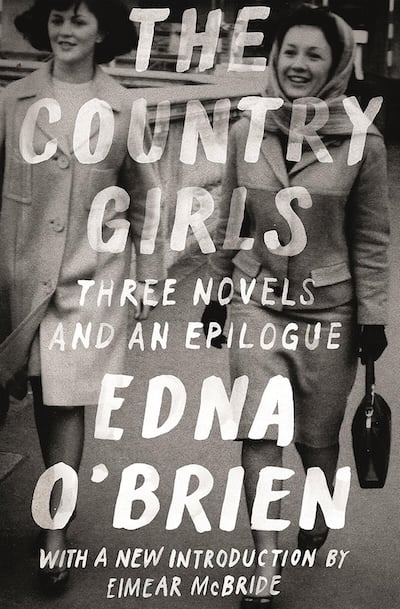
Her work is noted for its lyrical depiction of women, sexuality, loneliness, emotional isolation, desire, survival, and rebellion. O’Brien is best known for her first novel, The Country Girls, which, upon its debut, was both denounced and lauded.
A prolific writer, O’Brien, challenged taboos of religion, sex, gender, patriarchy, and persecution.
The Early Years: A Lonely Country Girl
Josephine Edna O’Brien was born to Lena and Michael O’Brien in the rural village of Tuamgraney, County Clare. O’Brien was born into a newly independent Ireland, an Ireland free of British rule, but an Ireland where the Catholic Church and state largely controlled women’s lives. The youngest of four children, O’Brien’s childhood was marred by turbulence and tension.
From the outside, her family appeared to be prosperous. She lived in a large house on 600 acres of land, where her parents kept horses and employed farm workers, but money was scarce. O’Brien’s father was an unsuccessful horse breeder who gambled, drank, and was prone to violence.
Her mother, who described her as a lonely child, was fearful of books. The only books in the O’Brien house were bloodstock manuals and the Bible. There was no public library in the village. Despite this, O’Brien said she loved words and that words were her great companions and education.
Raised in a strict Catholic family, O’Brien received her formal early education at the Convent of Mercy, where she excelled in the sciences. Upon graduation, O’Brien obeyed her parents’ wishes and enrolled in a pharmaceutical college in Dublin, and then worked as a licensed pharmacist. It was here in Dublin that O’Brien began to write fiction for the literary magazine The Bell.
. . . . . . . . . . .
. . . . . . . . . . .
Marriage and Early Writing Career
In 1952, she met the Irish-Czech writer, Ernest Gébler, who was twenty years her senior. To escape her parents’ disapproval, O’Brien and Gébler eloped in 1954. After several moves, O’Brien and Gébler settled in London in 1960 with their two sons, Carlo and Sasha. Here, O’Brien found work reviewing manuscripts for the publishing house Hutchinson.
Ian Hamilton, who ran Hutchinson, was so impressed with her summaries that he and Blanche Knopf each advanced her £25, so she could write a novel. Written in three weeks and through many tears, The Country Girls novel was born. The novel had a polarizing effect on the public, and in her personal life, as well. O’Brien’s success put a strain on her marriage. Upon reading The Country Girls, her husband told her, “You can write and I will never forgive you.”
O’Brien eventually fled her marital home and divorced Gébler in 1968. O’Brien succeeded in winning custody of their two children after an acrimonious three-year custody battle and a promise that she would never allow her children to read her novel August is a Wicked Month. Years later, Gébler continued to attack her, claiming that he had written almost all of her early work.
A Saint or a Sinner?
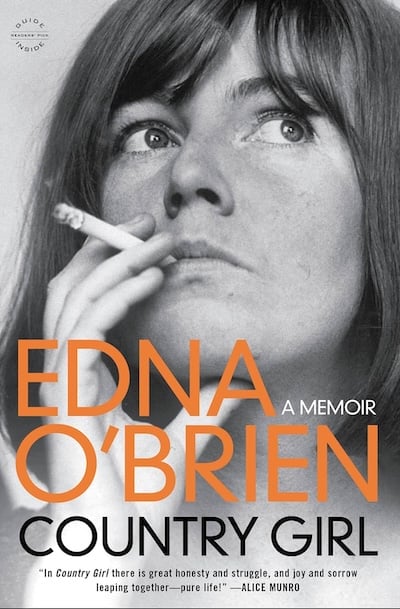
Her mother also disapproved of her being a writer. In her 2012 memoir, Country Girl, O’Brien writes that after her mother passed away, O’Brien discovered that her mother had inked out offensive language in her copy of The Country Girls.
The Country Girls scandalized her native Ireland, where it was banned and censored by the Catholic Church. While O’Brien’s novel was acclaimed and admired in places like London and New York, back in Ireland, it was labeled as “filth” by the Irish Minister of Justice. It was so controversial and had created such a furor that it was publicly burned in O’Brien’s childhood village. O’Brien said that people drew their curtains and treated her as if she were a Jezebel.
. . . . . . . . . . .
. . . . . . . . . . .
Single Life in Swinging London
In the 1960s and 70’s, O’Brien led what was perceived by the public as a glittering, glamorous, and libertine lifestyle. This sometimes made it difficult for O’Brien to be taken seriously as a writer. As a single mother of two, she moved to the Chelsea neighborhood of London, where her home became a hub for artists, actors, writers, musicians, and other luminaries.
She threw parties in her Chelsea home, drawing guests like Marlon Brando, Jane Fonda, Paul McCartney, Judy Garland, Jackie Onassis, Mick Jagger, Vanessa Redgrave, J.D. Salinger, Samuel Beckett, Francis Bacon, Elizabeth Taylor, and Harold Pinter. To her dismay, critics began focusing more on her appearance, relationships, and social life than her writing.
Literary influences: Rejoicing in Reading
While working in the Dublin pharmacy in her early 20s, she began reading works by Tolstoy, Thackeray, and O’Connor, among others, in her spare time. As a child, she had dreamed of becoming a writer, but it wasn’t until she learned that James Joyce’s A Portrait of the Artist as a Young Man was semi-autobiographical that she seriously contemplated becoming a writer herself.
James Joyce had a profound influence on her and her writing. She wrote nonfiction works about him: James and Nora (1981) and James Joyce (1999). At the age of 92, O’Brien wrote the play, Joyce’s Women. She said she learned more from Joyce than anyone else in the world. O’Brien so revered Joyce that she was able to quote from his works from memory. Her own writing style has been compared to Joyce’s with its Hiberno-English cadences, rhythms, and syntax.
Other literary heroes, such as Woolf, Byron, and Beckett, also became the subjects of plays and nonfiction works. She frequently spoke of her admiration for Chekhov, Tolstoy, Proust, Flaubert, the Brontë sisters, Sylvia Plath, and Shakespeare, and the impact and impressions they had made on her.
Books by her favorite writers were always open on her desk, and pictures of her favorite authors were displayed in her study. Her voracious appetite for reading made up for her lack of formal literary education.
. . . . . . . . . . .
. . . . . . . . . . .
Themes in her Work:
The Things We’re Not Supposed to Talk About
O’Brien’s novels often depict themes such as the condition of women in society, control of women and their bodies, the insidiousness of patriarchy, love, loss, loneliness, and exile. Her writings dealt with the personal inner lives of characters, as well as politics, religion, and society.
O’Brien said that she wrote about the things we are not supposed to talk about. She wrote about topics like sexuality and repression (The Country Girls), incest and abortion (Down by the River), and sexual violence and survival (Girl). Her writing style has been described as lyrical and autobiographical, with her later novels focused on the universality of the female experience.
When her first novel, The Country Girls, came out, John Broderick of the literary magazine Hibernia ran a quote from O’Brien’s husband saying that O’Brien’s talent resided in her knickers. Like many female authors, O’Brien endured much casual sexism from critics, perhaps more than most.
Instead of focusing on her writing, reviews, and articles often focused on her appearance, her accent, and her love life. In an interview with Faber Books in 2012, O’Brien said, “It’s hard to be taken as seriously as men. It is unfair, but you know it’s a part of life. What counts is the dedication, the absolute fanatic determination, and I suppose love that one puts into the work.”
O’Brien sometimes drew criticism because her early work focused on love, and many of her characters could be perceived as “victims.” In an NPR interview in 2019, O’Brien herself said, “I’ve always written about girls and women, both as victims and as fighters combined, that duality. They’ve been through hell, and somehow they come through.”
O’Brien may be viewed as being ahead of her time as she raised controversial issues in her writing and lived a life of independence. In 2015, O’Brien signed a public letter advocating for the repeal of the Eighth Amendment to the Irish Constitution, which restricted women’s access to abortion in Ireland. Through her writing and her actions, O’Brien addressed the differences and difficulties women face, and paved the way for a new generation of female Irish writers.
. . . . . . . . . . .
. . . . . . . . . . .
Éire and Exile
“I live out of Ireland because something in me warns that I might stop if I lived there, that I might cease to feel what it has meant to have such a heritage….” (“Mother Ireland,” The Sewanee Review, Winter 1976)
O’Brien’s native land of Ireland permeates throughout her books and had a significant influence on her writings. Like her literary heroes, Joyce and Beckett, she too became a literary exile. O’Brien said that exile and separation were good for her and that she might not have otherwise written books.
She said she both loved and hated Ireland. Despite living in England, O’Brien proudly and fervently supported Irish nationalism and freedom from British colonialism. In 1972, she led a march to protest the incarceration of Irish Republican Army leader Seán Mac Stiofáin.
Throughout the 1990s, she followed the Northern Ireland peace negotiations and penned an open letter to then British Prime Minister Tony Blair, arguing that controversial former Sinn Féin President Gerry Adams should be included in political talks.
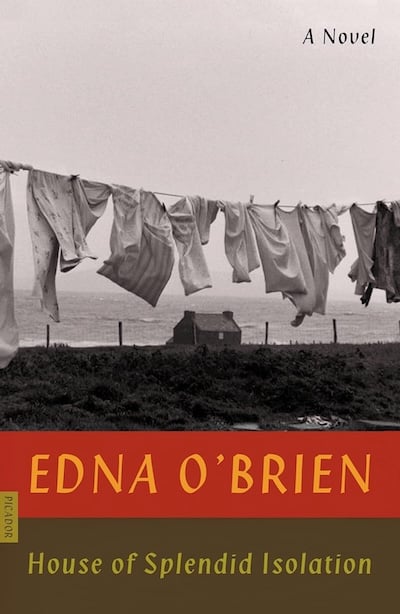
In 2006, O’Brien wrote a poem included in a book marking the 25th anniversary of Irish nationalist hunger strikes. Her novel, The House of Splendid Isolation, is considered to be an important novel about the “Troubles” in Northern Ireland. O’Brien endured heavy and disparaging criticism for her support of a United Ireland, but continued to courageously champion her ideals.
Awards and Honors
Despite her critics and controversies, O’Brien was the recipient of many awards throughout her career. Earlier prizes included the Kingsley Amis Award in 1962, the Los Angeles Times Book Prize in 1990, and the European Prize for Literature in 1995. O’Brien received a Lifetime Achievement Award at the 2012 Irish Book Awards.
In 2018, she won the Presidential Distinguished Service award for the Irish abroad, was appointed a Dame of the British Empire for her services to literature, and received the Pen Nabokov Award for Achievement in International Literature. In 2019, she received the David Cohen Prize for Literature. She was named Commander of the French “Ordre des Arts et Lettres” in 2021.
O’Brien received honorary doctorates from Galway University, Queen’s University Belfast, and the University of Limerick. In 2006, University College Dublin awarded her the Ulysses Medal. In 2015, she was made a member of Aosdána and was elected as a Saoi (wise one).
Death
“I loved the idea of writing because it suggested to me that life itself could be rendered more deeply and beautifully than normal life as lived.” –The Irish Times, September 12, 1992
Edna O’Brien died in London, England, at the age of 93 after a long battle with cancer. Commended and controversial in her time, Edna O’Brien will forever be remembered as transforming Irish fiction.
Contributed by L.C. Canivan.
. . . . . . . . . . . .
Further Reading and Sources
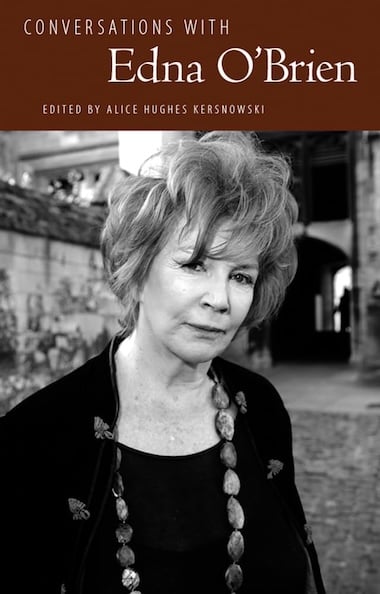
- Conversations with Edna O’Brien edited by Alice Hughes Kersnowski
- Edna O’Brien on Girl and 6 Decades of Writing ‘Very Difficult’ Stories about Women
- Interview with Edna O’Brien by Faber Books (October 2012)
- Imagine: Edna O’Brien: Fearful and Fearless (BBC documentary, 2019)
- Edna O’Brien, the Controversial Irish Novelist (Obituary; Irish Times)
- Edna O’Brien Obituary (The Guardian)
- The Iconoclastic Irish Author Who Wrote The Country Girls
- Britannica
- Celebrated Irish Author Edna O’Brien Dies at 93
Literary works
Novels
- The Country Girls (1960)
- The Lonely Girl (later retitled Girl with Green Eyes, 1962)
- Girls in Their Married Bliss (1964)
- August Is a Wicked Month (1965)
- Casualties of Peace (1966)
- Zee & Co. (1971)
- A Pagan Place (1971)
- Night (1973)
- Johnny I Hardly Knew You (1977)
- The Dazzle (1981)
- The Rescue (1983)
- The High Road (1988)
- Time and Tide (1992)
- House of Splendid Isolation (1994)
- Down by the River (1997)
- Wild Decembers (1999)
- In the Forest (2002)
- The Light of Evening (2006)
- The Little Red Chairs (2015)
- Girl (2019)
Collections
- The Love Object (1968)
- Three Dublin Plays (1969)
- A Scandalous Woman and Other Stories (1974)
- Collector’s Choice (1978)
- A Rose in the Heart (1979)
- A Fanatic Heart (1984)
- Lantern Slides (1990)
- Edna O’Brien Reader (1994)
- Mrs. Reinhardt (1996)
- Irish Revel (1998)
- Returning (1998)
- Triptych and Iphigenia (2005)
- Saints and Sinners (2011)
Children’s Books
- The Dazzle (1981)
- A Christmas Treat (1982)
- The Rescue (1983)
- Tales for the Telling (2017)
Short Stories/Novellas
- Shovel Kings (2009)
- Paradise (2019)
Nonfiction
- Mother Ireland (1976)
- James and Nora (1981)
- Vanishing Ireland (1987)
- James Joyce (1999)
- Byron in Love (2009)
- Country Girl: A Memoir (2012)
Anthologies
- Arabian Days (1977)
- Tales for the Telling (1986)
- New Writing from Ireland (1994)
Dramas
- A Pagan Place (1973)
- Zee & Co. (1975)
- Virginia (1980)
- Family Butchers (2005)
- Triptych and Iphigenia (2005)
- Haunted (2009)
- The Country Girls (2011)
- Joyce’s Women (2014)
Poetry Collection
- On the Bone (1989)
Leave a Reply