20th-Century Women Novelists Worth Rediscovering
By Nava Atlas | On September 23, 2025 | Updated September 26, 2025 | Comments (5)
So many books, so little time … especially since so many new and noteworthy books by women are published each year. But let’s not forget those who came before. There are a plethora of 20th-century women novelists whose works deserve to be rediscovered and read; here are a dozen of them.
This list is a small sampling of a treasure trove of women authors who were widely read in their lifetimes, yet have been somewhat forgotten — and shouldn’t be! This selection of 20th-century writers are worthy of rediscovery if you haven’t read them for a while, or to discover for the first time if they’re new to you.
You may also enjoy Bustle’s list of overlooked classic novels by women.
. . . . . . . . . .
Vera Caspary

Vera Caspary (1899– 1987) was a remarkably prolific American novelist, screenwriter, and playwright. Over the course of her long career, she became known as a writer of crime fiction and thrillers, though she created works in other genres.
Many of Caspary’s works featured young, forward-thinking women (then called “career girls”) who fought for female autonomy and equality, and refused male protection.
With nearly two dozen novels published, the best known remains Laura (1943), she also wrote long short stories and novellas, not to mention numerous screenplays for Hollywood films, some based on her own works. The Blue Gardenia, Fritz Lang’s 1953 classic noir film, is based on her novella, The Gardenia (1952). Yet Vera Caspary’s books are exceedingly hard to come by, other than these listed below:
- Laura (1943)
- Bedelia (1945)
- The Man Who Loved His Wife (1966)
. . . . . . . . . .
Jessie Redmon Fauset

Jessie Redmon Fauset (1882 – 1961) was an American editor, poet, essayist, and novelist who was deeply involved with the Harlem Renaissance literary movement.
Jessie Fauset was known as one of the “midwives” of the movement, as someone who encouraged and supported other talents. She was especially noted for her work as the literary editor of The Crisis, NAACP’s journal, in the Harlem Renaissance era. In that capacity, she discovered and nurtured several major Black literary figures.
She also wrote four well-regarded novels and numerous short stories and essays; she was an accomplished poet as well. She wrote four novels about race and class, all of which are a century old, give or take a few years, are still wonderful reads today:
- There Is Confusion (1924)
- Plum Bun: A Novel Without a Moral (1928)
- The Chinaberry Tree (1931)
- Comedy, American Style (1933)
. . . . . . . . . . .
Edna Ferber
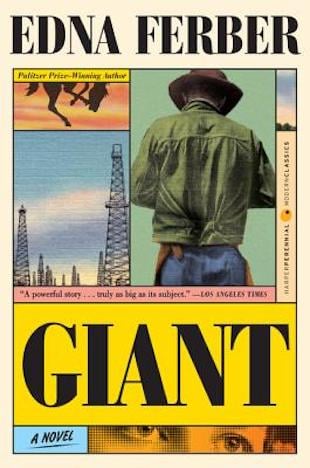
Edna Ferber (1885 – 1968), American novelist and playwright, was one of the most successful mid-20th-century authors — —primarily the 1920s through the early 1950s, with earning power to prove it. Some of her sprawling novels captured a slice of Americana, and several became famous films and/or stage plays, notably Saratoga Trunk, Cimarron, Giant, and Show Boat.
Ferber’s reputation was cemented with So Big (1924), a surprise (to her) bestselling novel that was awarded the 1924 Pulitzer Prize for fiction (even more of a surprise). Popular writers rarely enjoy critical acclaim, but in her case, the critics were generally kind, even as her subsequent work became less literary and more mainstream.
This is but a small portion of Ferber’s prolific output, and a good place to start with her novel:
. . . . . . . . . . .
Rumer Godden
Rumer Godden (1907 – 1998), the British-born novelist and memoirist. was raised mainly in India at the height of colonial rule. A mid-20th-century favorite whose novels melded the commercial and literary; nine of them became films. One of several memoirs of her dramatic life, and arguably the best known, is A House With Four Rooms.
In 1939, her first novel, Black Narcissus, was published to immediate acclaim and became a bestseller. The story is set in a cloister high in the Himalayas. A group of nuns in a convent in northern India is the backdrop for a story of cultural conflict and obsessive love.
Black Narcissus set the stage for a succession of novels that are defined by vivid settings and realistic characters in masterful storytelling that was sometimes described by contemporary reviewers as “deceptively simple” and “subtle magic.” Here’s where to start with Rumer Godden:
- Black Narcissus (1939)
- The River (1946)
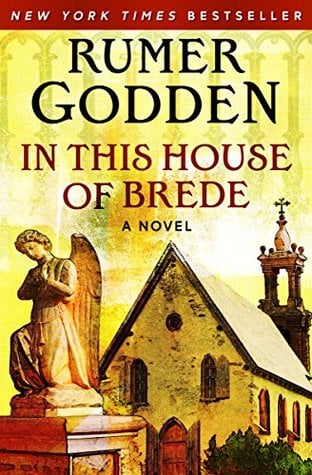
- In This House of Brede (1969)
- The Peacock Spring (1975)
. . . . . . . . . . .
Laura Z. Hobson
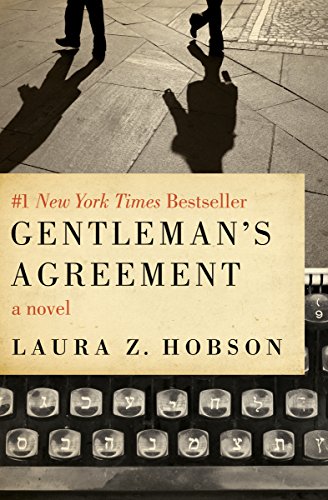
Laura Z. Hobson (1900 – 1986) is an author whose name has been eclipsed by that of her best-known novel, Gentleman’s Agreement. The film version went on to win multiple Academy Awards. Laura wrote a number of other fascinating and readable novels that have fallen into obscurity.
Before she became a full-time novelist with the 1947 publication of Gentleman’s Agreement, she had been a successful writer of advertising and promotional copy on the staff of Luce publications, where she wrote for Time, Life, and Fortune.
. . . . . . . . . . .
Ann Petry
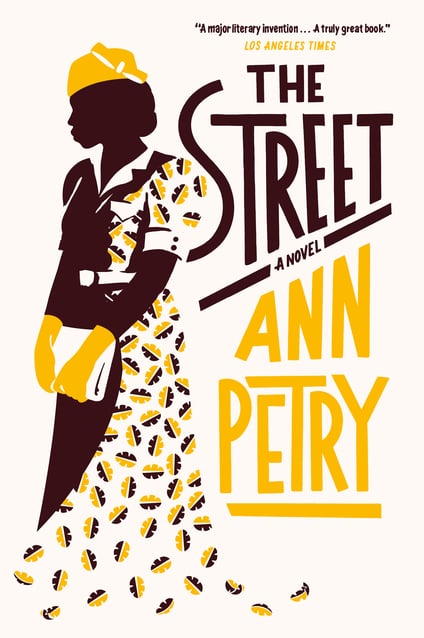
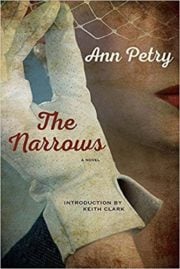
Ann Petry (1908 – 1997) was the first Black American woman to produce a book (The Street, 1946) whose sales topped one million. At its peak, this novel had sold 1.5 million copies.
Ann trained as a pharmacist so that she could follow in her father’s footsteps. But her heart was with reading and writing.She was particularly taken with Louisa May Alcott’s fictional heroine Jo March as a role model for her writerly aspirations.
When The Street was published in 1946 it became an overnight sensation. The New York Times called it “a skillfully written and forceful first novel.’’ Its significance was as a frank explored Black women’s experience through the intersection of race, gender, and class. It was reissued in a new edition in 1992 along with her other novels and a collection of short stories, all of which depict slices of Black life in 20th-century America:
- The Street (1946)
- Country Place (1947)
- The Narrows (1953)
- Miss Muriel and Other Stories (1971)
. . . . . . . . . . .
Dawn Powell

Dawn Powell (1896 – 1965) wrote prolifically throughout her life, producing novels, short stories, poetry, and plays. She is sometimes considered a “writer’s writer,” though sadly, nearly all of her work was out of print by the time she died. She didn’t gain much notoriety — for better or worse — during her lifetime, but many of her works have been rediscovered and rereleased, much to the joy of devoted fans and new readers alike.
Born in Mount Gilead, Ohio, Powell started her life in a small American town, a setting that she would often use in her early writings. Her novels were replete with social satire and laced with wit. Here are four of her fifteen novels:
- Angels on Toast (1940); reissued in 1956 as A Man’s Affair
- A Time to Be Born (1942)
- My Home Is Far Away (1944)
- The Locusts Have No King (1948)
. . . . . . . . . . .
Barbara Pym
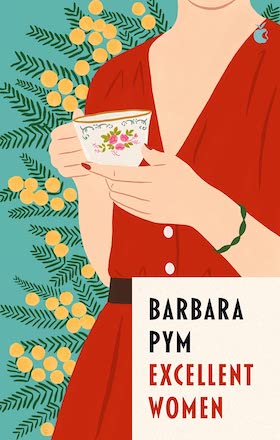
Barbara Pym (1913 – 1980) was a British author whose novels explored manners and morals in village life. The following selection of quotes from Excellent Women and other novels by Barbara Pym demonstrate her sense of irony and subtle, understated wit.
Though most her books’ action, such as it is, is set in small town England locales, her stories convey universal truths about human foibles. Pym published thirteen novels in her lifetime, and four posthumously. Pym was often compared to Jane Austen for her comedies of manner.She has been called Britain’s “other Jane Austen” or “new Jane Austen.”
Her baker’s dozen of novels, most published in her lifetime and a few posthumously make up the Barbara Pym canon, with many devotees citing Excellent Women as their entry-point or overall favorite. Here the first four of a baker’s dozen of her novels:
- Some Tame Gazelle (1950)
- Excellent Women (1952)
- Jane and Prudence (1953)
- Less than Angels (1955)
. . . . . . . . . . .
Jean Rhys
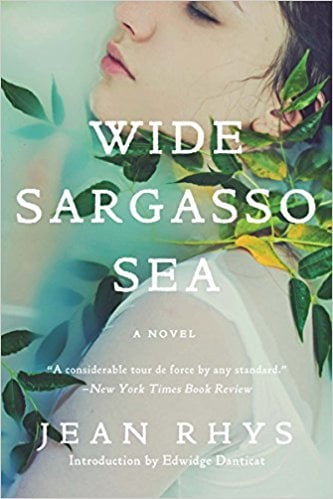
Jean Rhys (1890 – 1979) is best remembered for Wide Sargasso Sea, (1966), a prequel and post-colonial response to Charlotte Brontë’s Jane Eyre. This imagining of how “the madwoman in the attic” came to be is her most remarkable and enduring work of fiction.
Wide Sargasso Sea was published when Rhys was 76, and revived her flagging literary career. Central to its plot is its imaginative presentation of Rochester’s Creole wife Antoinette’s descent into madness. She becomes Bertha, Rochester’s mad wife. You’ll never look at that character in the same way if you re-read Jane Eyre! That said, it works well as a standalone novel.
Rhys’s Caribbean roots figured into her 1934 novelVoyage in the Darkand shorter fiction such as The Day They Burned the Books. In this sampling of four of her novels, you’ll see that there was a very long gap beforeWide Sargasso Sea, her last novel, was published.
- After Leaving Mr. Mackenzie, 1931
- Voyage in the Dark, 1934
- Good Morning, Midnight, 1939
- Wide Sargasso Sea, 1966
. . . . . . . . . . .
May Sarton
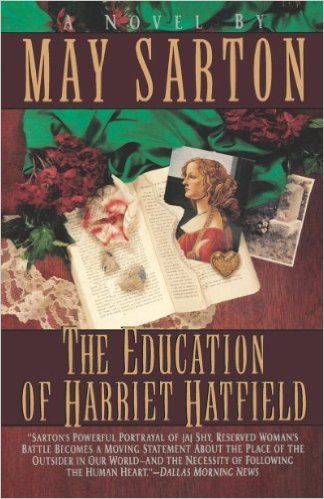
May Sarton (1912 – 1995), might be better remembered for her memoir series that began with Plant Dreaming Deep, but she was also a pioneer of modern queer fiction. Mrs. Stevens Hears the Mermaids Singing was pretty radical for 1965 and the lesbian novel, The Education of Harriet Hatfield , was still considered ahead of its time in 1989.
Despite coming out as a lesbian during a time when very few others did, the popularity of her work wasn’t affected. In fact, it brought high recognition and respect, later to become staples in women’s studies classes. She preferred, however, for her work to be appreciated for its exploration of what is universal in love, rather than as lesbian literature.
May Sarton was also an accomplished and widely published poet. Here’s a sampling of her best-known novels:
- Mrs. Stevens Hears the Mermaids Singing (1965)
- Anger (1982)
- The Magnificent Spinster (1985)
- The Education of Harriet Hatfield (1989)
. . . . . . . . . . .
Margery Sharp
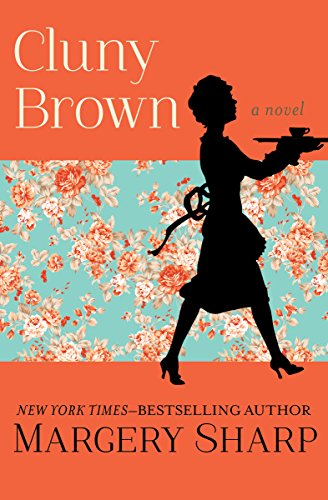
Margery Sharp (1905 – 1991), a popular British author in her lifetime, wrote in the comic novel genre, the best known of which is Cluny Brown.She was also known for The Rescuers series for children, two of which were adapted into animated Disney films.
Though most of her works were on the lighthearted side, the devastating bombing of London featured in Britannia Mews. She continued to produce works that are generally considered comic novels, but she was a keen observer of human nature and foibles and captured the details of daily life of the World War II years.
- Cluny Brown (1944)
- Britannia Mews (1946)
- The Eye of Love (1957)
- Something Light (1960)
. . . . . . . . . . .
Elizabeth von Arnim

Elizabeth von Arnim (1866 – 1941), an Australian-born novelist, launched her writing career with Elizabeth and her German Garden (1898). Little is known about this mysterious author, but her tales of unhappy marriages told with a dry wit are still a treat to read.
Vera (1922) isn’t Elizabeth’s best known work, but is considered her finest novel from a literary standpoint. Like some of her other works, it is semi-autobiographical and draws upon her ill-fated marriage with Earl Russell.
Following closely upon its heels was The Enchanted April (1922). One of von Arnim’s most commercially successful works, it was charming and lighthearted, almost the opposite of Vera from the perspective of mood. The former was adapted to film in 1991, titled Enchanted April.
- The Pastor’s Wife (1914)
- Vera (1922)
- The Enchanted April (1922)
- Mr. Skeffington (1940)
It’s such fun learning about these writers and actually FINDING their books.Read preface to “Irish Women Writers”who mentions several neglected Irish women.One was Pamela Hinkson.I found her novel The Ladies Road on one of my NZ online bookshops.Also know that Harriet Hatfield there.
Wonderful to see some authors I love here – and spurs me on to read more Margery Sharp. The podcast I do with my friend Rachel (Tea or Books?) is doing The Education of Harriet Hatfield on the next episode, so I look forward to reading it.
Hi Simon — great to see you here from StuckinaBook, which I’ve visited! I’ll definitely look out for your podcast.
Thank you, thank you, thank you, for including May Sarton. Although I loved the Education of Harriet Hatfield my personal favorite is The Magnificent Spinster.
Thanks for your comment, Thomas. I look forward to reading more of Sarton’s fiction, as I’ve mostly read her memoirs and poetry.