By Angelica Shirley Carpenter | On August 28, 2025 | Updated August 29, 2025 | Comments (0)
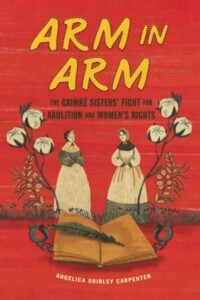
In 1838, Sarah and Angelina Grimké were likely the best-known — and most hated — women in the United States. Both published extensively, including essays and pamphlets promoting abolition and women’s rights.
Arm in Arm: The Grimké Sisters’ Fight for Abolition and Women’s Rights by Angelica Shirley Carpenter (Zest Books, 2025), introduces these fascinating figures to middle grade through high school readers, but can be enjoyed by all ages.
Sarah Grimké (1792 – 1873), the more reserved sister, preferred writing, while Angelina Grimké (1805 – 1879) loved the spotlight. Her spirited speeches often left audiences in tears. Read More→
By Nava Atlas | On August 13, 2025 | Updated August 16, 2025 | Comments (0)
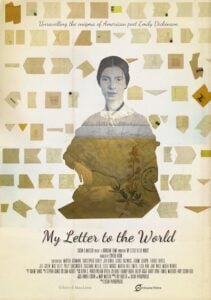
Presented here is a collection of documentaries and biopics exploring the lives of iconic women poets: Maya Angelou, Edna St. Vincent Millay, Julia de Burgos, Emily Dickinson, Ingrid Jonker, and Sylvia Plath.
On the surface, it wouldn’t seem like a full-length film about a poet would be anything to write home about, so to speak. But behind their deep, soulful lines were complex lives, not always spent at a desk.
Best of all, most of the films in this roundup can be viewed gratis on YouTube by following the links provided. Read More→
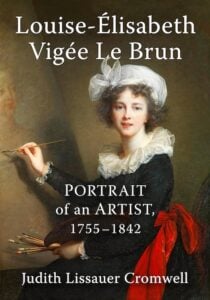
The latest biography from historian Judith Lissauer Cromwell, Louise-Élisabeth Vigée Le Brun: Portrait of an Artist, 1755–1842 (McFarland, 2025), follows the remarkable life of this painter whose portraits of European royalty and nobility hang in many of the world’s most important museums.
As a young woman in the male-dominated society of 18th-century France, Louise-Élisabeth Vigée Le Brun was denied an artistic education and forced to nurture her passion outside of conventional schooling. Vigée Le Brun’s vibrant art, in addition to her charm and beauty, caught the attention of Queen Marie-Antoinette, who honored her as her chosen painter.
At the pinnacle of her fame and fortune, however, the Revolution forced Vigée Le Brun to flee, leaving everything behind except her only child, a daughter. Read More→
By Teagan ONeil | On June 30, 2025 | Comments (0)
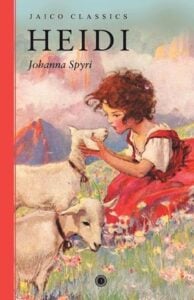
Johanna Spyri and Frances Hodgson Burnett illustrate the effects of nature on well-being through the symbolism and imagery of nature in their novels, Heidi and The Secret Garden. In both of these beloved classic novels, the authors show how the characters’ interactions with nature sets them on transformative journeys that help heal physical ailments and mental distress.
Spyri’s Heidi (1881) follows a young girl who has lost her parents and is taken to the Swiss Alps to stay with her grandfather. Mary Bernath, literature professor at Bloomsburg State University, writes that “Heidi’s home in the Alps is an idyllic place, far from the modern world and its concerns.”
After a short time, she is sent to the city of Frankfurt to be a companion to Klara, a slightly older girl who is unable to walk. While in Frankfurt, Heidi falls ill and yearns to return to the natural world of the Alps. Read More→
By Lama Obeid | On June 30, 2025 | Comments (0)
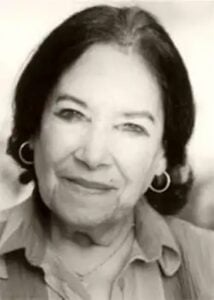
Despite the challenges and pressures that Palestinian women writers have historically faced from displacement, occupation, and societal pressures, prominent writers have emerged steady and strong, whether in Palestine or exiled in the diaspora. Poet Fadwa Tuqan (1917 – 2003) was one of these women.
Palestinian women writers, like other women writers across the globe, did not have it easy, especially those who lived through the Nakba. This was the 1948 catastrophe when more than 700,000 Palestinians were displaced from historical Palestine (modern day Israel) to Gaza, the West Bank, Jordan, Syria, and Lebanon.
Added to this displacement were societal pressure and cultural norms that put women at a disadvantage compared to their male peers. Read More→
By Marie Lebert | On June 26, 2025 | Updated November 11, 2025 | Comments (0)
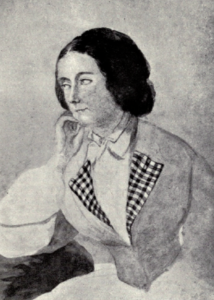
Eliza Ashurst Bardonneau (1813–1850), born Elizabeth Ann Ashurst, belonged to a family of English radical activists. She teamed up with her friend Matilda Mary Hays (1820–1897), an English journalist writing about women’s rights, to offer the first translations into English of some works by French novelist George Sand.
They both liked the subversive tone of Sand’s novels and the political and social issues tackled in her works.
Eliza Ashurst belonged to a family of English radical activists who supported causes such as abolitionism, women’s suffrage and Italian unification (Risorgimento). Read More→
By Marie Lebert | On June 25, 2025 | Updated October 25, 2025 | Comments (0)
George Eliot was the pen name used by the English writer Mary Ann Evans (1819–1880). She used her real name as a translator, editor and critic, and used the pen name George Eliot for her fiction.
By her own account her first literary works were translations of theological and philosophical works, which influenced her work as a fiction writer. She also led a life defying the conventions of her time.
Mary Ann Evans received a good education and was a voracious reader. Her father was the estate manager of the Arbury Hall Estate (in Nuneaton, Warwickshire, England) and she had access to the large library of the estate, including many Greek classics. Read More→
By Marie Lebert | On June 23, 2025 | Updated October 2, 2025 | Comments (0)
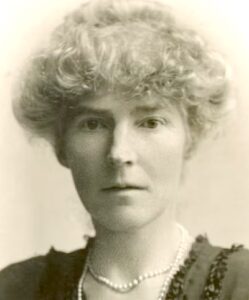
Gertrude Bell (1868 – 1926) was an English archeologist, writer, and translator. She traveled extensively in the Middle East and advocated for Arab nationalism before settling permanently in Baghdad and contributing to the nation building of the Kingdom of Iraq.
She published several books about her travels and her archeological excavations. She corresponded extensively with many friends, colleagues and policy makers during her whole life. Read More→